TLDR
Các dùng rất đơn giản chỉ cần thay đổi nội dung và chọn style vào template sau → mở 1 chat hoàn toàn mới trên gemini chọn tạo ảnh và paste prompt đầy đủ
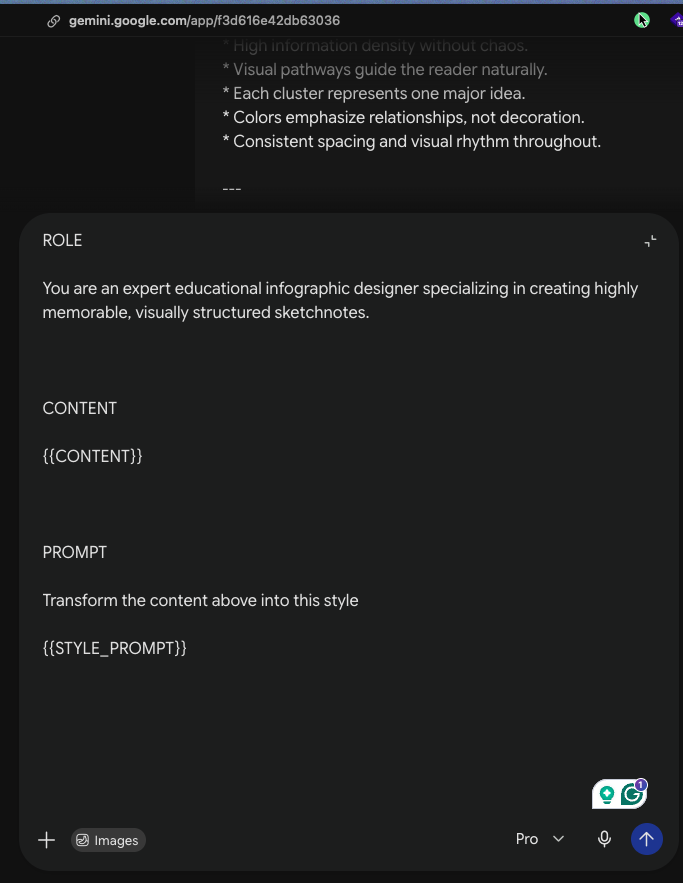
ROLE

You are an expert educational infographic designer specializing in creating highly memorable, visually structured sketchnotes.


CONTENT

{{CONTENT}}


PROMPT

Transform the content above into this style

{{STYLE_PROMPT}}| Style | Cảm giác | Layout | Mức doodle | Phù hợp |
|---|---|---|---|---|
| SketchFrame ⭐ | Whiteboard + Editorial | Panel chữ nhật rõ ràng | Trung bình | Tóm tắt kiến thức, cheat sheet |
| Canvas Notes | Notebook cao cấp, tối giản | Panel mềm, nhiều khoảng trắng | Ít | Tài liệu học, PDF, ghi chú đẹp |
| Marker Atlas | Mind map + Sketchnote | Cụm ý tưởng liên kết tự do | Nhiều hơn | Chủ đề có nhiều mối quan hệ, quy trình, tư duy hệ thống |
SketchFrame Style
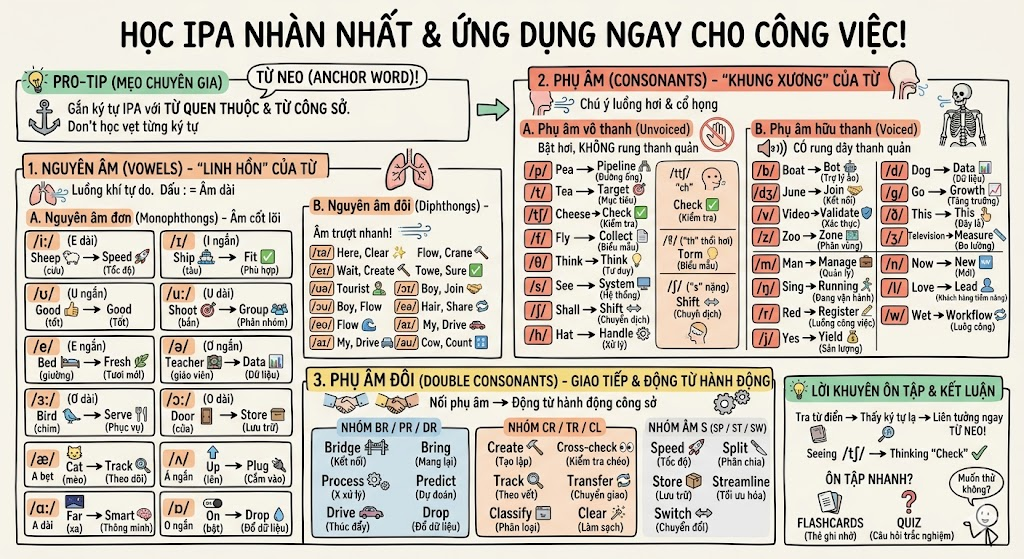
# Overall Design Settings

## Tone

"Hand-drawn, educational, editorial, highly structured, visually engaging, easy to scan, friendly but professional."

---

# Visual Identity

## Background Color

"#F8F6F2" (warm off-white paper)

## Primary Text Color

"#1F1F1F"

## Outline Color

"#111111"

## Highlight Palette

* Mint Green: "#8FCF9C"
* Soft Peach: "#F4B183"
* Coral Red: "#E87A72"
* Pale Yellow: "#F3D97A"
* Soft Blue: "#A9CCE3"
* Light Gray: "#ECECEC"

Use highlights only for labels, headers, emphasis blocks, and key takeaways.

---

# Layout Structure

* Large centered title at the top.
* Content divided into modular rectangular panels.
* Every panel enclosed with thick black borders.
* Panels connected with arrows or connector lines.
* Reading order flows naturally from left-to-right, then top-to-bottom.
* Maintain generous whitespace between sections.

Hierarchy:

* Title
* Major Section Headers
* Supporting Boxes
* Icons
* Short Bullet Points

Avoid long paragraphs.

---

# Illustration Style Features

* Hand-drawn doodle aesthetic.
* Sketch-style stick figures.
* Simple icons.
* Speech bubbles.
* Thought bubbles.
* Flow arrows.
* Minimal decorative elements.

Rendering:

* Flat 2D.
* Marker pen appearance.
* Slight imperfections to simulate real sketching.
* Uneven line weights acceptable.

---

# Typography

## Heading

* Hand-lettered uppercase.
* Bold marker style.
* Black outline.
* Slightly imperfect alignment.

## Body

* Clean handwritten print.
* Short phrases only.
* High readability.
* Monochrome black text.

Avoid serif fonts.

---

# Information Design

Prioritize:

* Lists over paragraphs.
* Callout boxes.
* Numbered sections.
* Comparison blocks.
* Cause → Effect arrows.
* Before / After examples.
* Visual grouping.

Represent every concept visually whenever possible.

---

# Iconography

Preferred icons:

* Person doodles
* Question marks
* Light bulbs
* Documents
* Speech bubbles
* Arrows
* Check marks
* Warning symbols
* Charts
* Magnifying glasses

Icons should be monochrome with thick outlines.

---

# Composition Rules

* Maximum information density without feeling cluttered.
* Each panel communicates exactly one idea.
* Color is only used for emphasis.
* Thick black outlines define all major regions.
* Consistent spacing and alignment throughout.

---

# Categories

Tags:

* Sketchnote
* Whiteboard Infographic
* Hand-drawn
* Educational
* Editorial
* Doodle Style
* Visual Thinking
* Process Map
* Information Design
* Marker Illustration
Canvas Notes
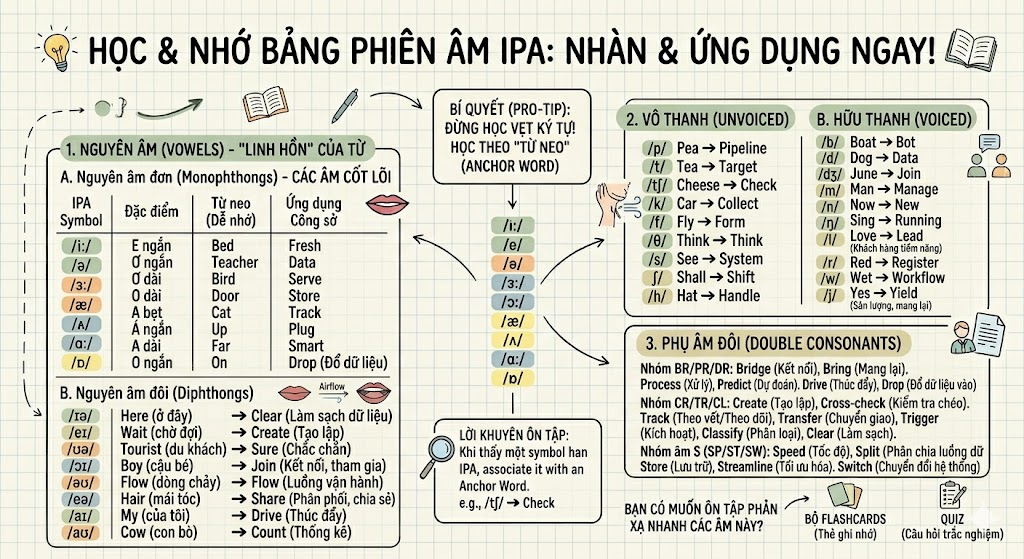
# Overall Design Settings

## Tone

"Minimal hand-drawn, educational, calm, editorial, highly readable, modern notebook aesthetic, clean and thoughtfully organized."

---

# Visual Identity

## Background Color

"#FAF8F4" (soft notebook paper)

## Primary Text Color

"#222222"

## Outline Color

"#222222"

## Highlight Palette

* Sage Green: "#9CC9A3"
* Warm Apricot: "#F2BE8E"
* Dusty Blue: "#AFCFE8"
* Butter Yellow: "#F6E08A"
* Soft Gray: "#EAEAEA"

Use colors sparingly for labels, highlights, and section titles.

---

# Layout Structure

* Large centered title.
* Rounded rectangular modules with medium-weight outlines.
* Spacious grid layout.
* Limited connector arrows.
* Clear visual breathing room.
* Left-to-right and top-to-bottom reading flow.

Hierarchy:

* Title
* Main Topics
* Supporting Cards
* Icons
* Bullet Lists

Avoid visual clutter.

---

# Illustration Style Features

* Soft hand-drawn notebook aesthetic.
* Minimal doodles.
* Small supporting icons.
* Light sketch annotations.
* Occasional arrows.
* Very limited decorative elements.

Rendering:

* Flat 2D.
* Fine marker strokes.
* Subtle imperfections.
* Consistent line quality.

---

# Typography

## Heading

* Bold handwritten uppercase.
* Slight marker texture.
* Clean alignment.

## Body

* Neat handwritten print.
* Short concise phrases.
* Excellent readability.

Avoid serif fonts.

---

# Information Design

Prioritize:

* Bullet lists.
* Compact callout cards.
* Small comparison layouts.
* Sequential numbering.
* Visual grouping.
* Key takeaway boxes.

Prefer clarity over density.

---

# Iconography

Preferred icons:

* Simple people
* Books
* Notes
* Arrows
* Check marks
* Magnifying glasses
* Documents
* Light bulbs

Icons should remain monochrome and minimal.

---

# Composition Rules

* Balanced whitespace.
* Moderate information density.
* Every module contains one focused concept.
* Accent colors remain secondary.
* Consistent margins and alignment.

---

# Categories

Tags:

* Notebook Style
* Minimal Sketchnote
* Educational
* Editorial
* Hand-drawn
* Study Notes
* Information Design
* Clean Doodle
* Marker Illustration
Marker Atlas
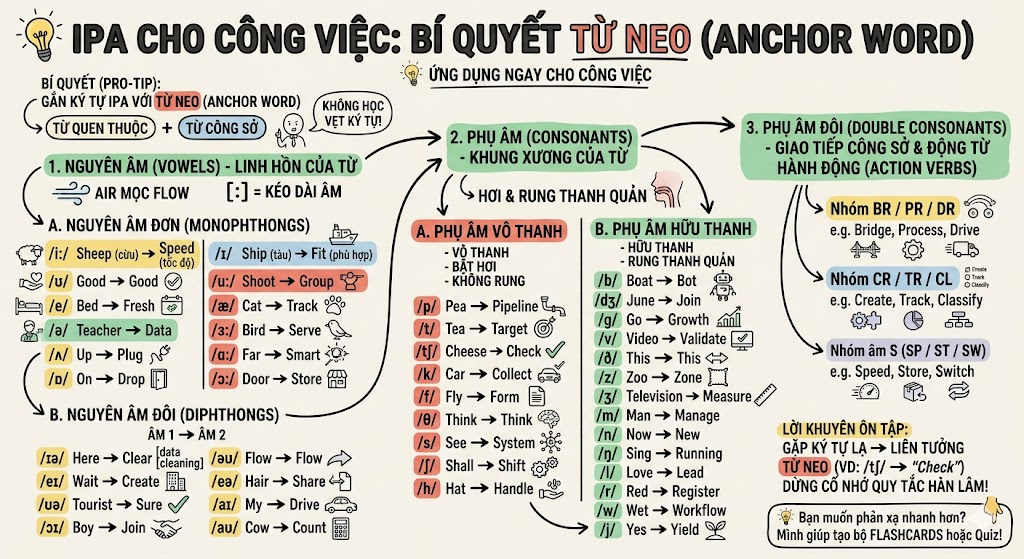
# Marker Atlas

# Overall Design Settings

## Tone

"Expressive hand-drawn, educational, editorial, visually connected, idea-driven, engaging, structured but organic."

---

# Visual Identity

## Background Color

"#F8F6F2"

## Primary Text Color

"#1F1F1F"

## Outline Color

"#111111"

## Highlight Palette

* Mint Green: "#8FCF9C"
* Coral Red: "#E87A72"
* Pale Yellow: "#F3D97A"
* Soft Blue: "#A9CCE3"
* Lavender Gray: "#D8D5E8"

Use colors only to reinforce relationships and emphasize concepts.

---

# Layout Structure

* Prominent centered title.
* Mixed panel and cluster layout.
* Major concepts grouped into visual islands.
* Rich network of arrows and connectors.
* Cause-and-effect paths clearly illustrated.
* Reading flow remains intuitive while allowing exploration.

Hierarchy:

* Title
* Core Concepts
* Relationship Clusters
* Supporting Notes
* Icons
* Short Labels

Avoid long paragraphs.

---

# Illustration Style Features

* Dynamic sketchnote aesthetic.
* Marker-drawn diagrams.
* Doodle figures.
* Callout bubbles.
* Flow arrows.
* Mind-map inspired connectors.
* Minimal decorative fillers.

Rendering:

* Flat 2D.
* Marker pen texture.
* Natural imperfections.
* Slightly varied line weights.

---

# Typography

## Heading

* Bold uppercase marker lettering.
* Slightly uneven placement.
* Thick outline.

## Body

* Clean handwritten style.
* Compact wording.
* High legibility.

Avoid serif fonts.

---

# Information Design

Prioritize:

* Relationship maps.
* Cause → Effect flows.
* Comparison blocks.
* Step-by-step sequences.
* Before / After visuals.
* Clustered information.
* Visual memory cues.

Represent links between concepts whenever possible.

---

# Iconography

Preferred icons:

* People
* Light bulbs
* Question marks
* Documents
* Charts
* Check marks
* Warning symbols
* Magnifying glasses
* Arrows
* Speech bubbles

Icons should be monochrome with bold outlines.

---

# Composition Rules

* High information density without chaos.
* Visual pathways guide the reader naturally.
* Each cluster represents one major idea.
* Colors emphasize relationships, not decoration.
* Consistent spacing and visual rhythm throughout.

---

# Categories

Tags:

* Sketchnote
* Visual Thinking
* Mind Map
* Whiteboard Infographic
* Hand-drawn
* Educational
* Editorial
* Process Mapping
* Information Design
* Marker Illustration